
Parawing kite vs wing foiling explained: compare control, learning curve, gear systems, and find the best foil setup for you.
Introduction: Why Parawing Kite Is Suddenly in the Spotlight
Over the past few years, foil sports have evolved faster than almost any other wind-powered discipline. What started with kite foiling has expanded into wing foiling, pump foiling, and now—quietly but persistently—parawing kite systems.
For many riders, especially those standing at the edge between kite foiling and wing foiling, the question is no longer “Can I foil?” but rather:
“Which foil system actually fits the way I want to ride?”
This is exactly where the parawing kite enters the conversation.
Unlike traditional inflatable kites or rigid-wing foiling setups, a parawing kite represents a minimalist, hybrid approach. It promises simplicity, portability, and reduced complexity—yet claims enough performance to stay relevant beyond beginner use.
At the same time, wing foiling continues to grow rapidly, praised for its intuitive control and safety, while kite foiling remains the benchmark for efficiency, speed, and upwind dominance.
This article is not written to promote trends. It is written to help riders make a long-term decision—based on physics, real riding scenarios, learning curves, and system compatibility.
What Is a Parawing Kite?
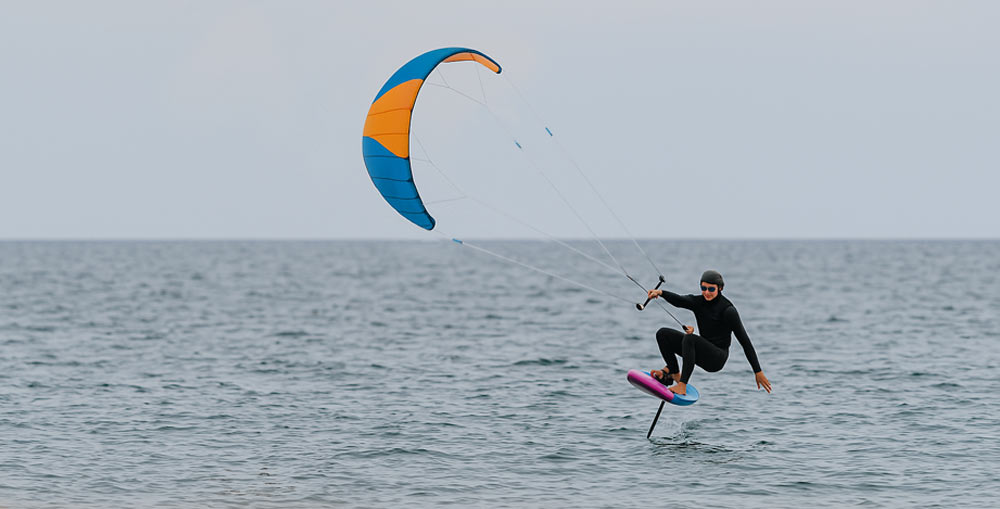
A parawing kite is best described as a soft, single-skin or lightly structured wing designed to generate pull without the complexity of traditional kite systems.
It typically features:
-
No inflatable struts
-
Minimal or no rigid frame
-
Simple bridle or handle-based control
-
Compact pack size
From a functional perspective, it sits somewhere between a traction kite and a handheld wing.
What makes parawing kite systems particularly interesting is not raw power, but how power is delivered. Instead of constant line tension or rigid wing loading, parawing kites tend to provide smoother, more progressive pull—especially useful during foil takeoff and low-speed cruising.
This characteristic alone explains why many riders see parawing kite systems as an entry point into foiling, or as a complementary tool alongside wing foiling and kite foiling.
How Parawing Kite Differs from Traditional Kite Foiling
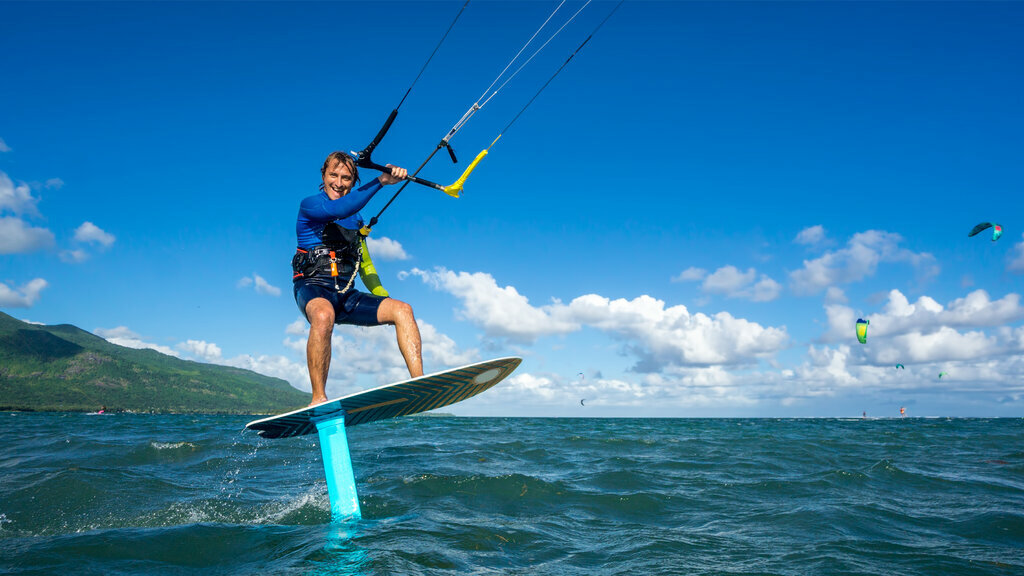
In kite foiling, the kite is flown overhead using long lines, allowing riders to access strong, clean wind at altitude. This creates unmatched efficiency and upwind performance, but introduces complexity in launch, landing, and safety management.
A parawing kite, by contrast:
-
Operates closer to the rider
-
Requires significantly less setup time
-
Reduces dependency on assisted launches
-
Trades top-end performance for simplicity
For riders who value spontaneity and minimal gear over maximum speed, this trade-off can feel worthwhile—especially in locations with limited launch space or variable wind.
However, it is important to understand that parawing kite systems are not replacements for kite foiling. They represent a different balance point between control, complexity, and efficiency.
Why Parawing Kite Appeals to Modern Foil Riders
The growing interest in parawing kite setups is not accidental. It reflects a broader shift in foil sports toward:
-
Reduced friction (physical and mental)
-
Faster session setup
-
More rideable days with less ideal wind
Many riders today are not chasing podiums. They are chasing time on the water.
A parawing kite allows:
-
Easier transport (especially for travel)
-
Faster rigging and derigging
-
Lower barrier to spontaneous sessions
This is particularly attractive to riders who already foil confidently and are looking for alternative ways to ride when conditions or logistics make kite foiling or wing foiling less convenient.

Understanding the Role of the Wing Kiteboard
No foil system exists in isolation. The wing kiteboard—often referred to simply as a foil board—plays a decisive role in how parawing kite, kite foiling, and wing foiling feel on the water.
A wing kiteboard typically emphasizes:
-
Early lift at low speeds
-
Stable pitch during takeoff
-
Efficient release from the water
Compared to traditional surf-style kiteboards, foil-specific boards are:
-
Thicker for volume distribution
-
Shorter for swing weight control
-
Reinforced for mast loads
For parawing kite systems in particular, board choice becomes even more critical. Because the wing provides less sustained pull than a kite, the board must compensate by offering:
-
Easy water starts
-
Predictable lift characteristics
-
Forgiving balance during low-speed transitions
This is why many riders transitioning into parawing kite setups struggle—not because of the wing, but because of board mismatch.

Kite Foiling: The Benchmark for Efficiency
To understand where parawing kite and wing foiling fit, we must briefly return to kite foiling, the discipline that set the standard.
Kite foiling excels because it accesses wind that is:
-
Stronger
-
Cleaner
-
More consistent
This allows kite foilers to ride:
-
In lighter wind than any other wind sport
-
With unmatched upwind angles
-
At higher sustained speeds
From an efficiency standpoint, no system currently surpasses kite foiling. Data from GPS-tracked freeride sessions consistently shows kite foiling requiring less rider input per kilometer traveled compared to wing foiling.
But efficiency comes at a cost:
-
Complex safety systems
-
Launch and landing constraints
-
Increased mental load for beginners
These factors explain why many riders explore alternatives—even if they respect kite foiling’s performance dominance.
Wing Foiling: Why Control Feels More Intuitive
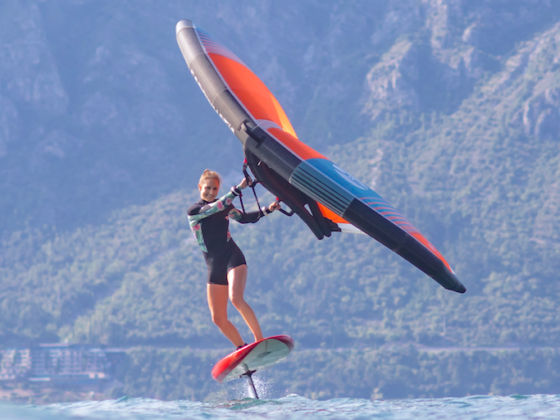
Wing foiling exploded in popularity for a simple reason: control feels personal.
Unlike kite foiling, where power is managed remotely via lines, wing foiling places the wing directly in the rider’s hands. This creates:
-
Immediate feedback
-
Easy power dump by letting go
-
Lower psychological stress for beginners
Wing foiling also offers greater flexibility in riding locations:
-
Narrow beaches
-
Lakes
-
Crowded launch areas
However, wing foiling demands more physical input per session and typically requires stronger wind to achieve sustained flight compared to kite foiling.
This trade-off between control and efficiency is central to the parawing kite discussion.
Where Parawing Kite Sits Between Kite Foiling and Wing Foiling
At a system level, the parawing kite borrows elements from both worlds.
From kite foiling:
-
Wind efficiency concepts
-
Harness-assisted pull (in some setups)
From wing foiling:
-
Compact gear philosophy
-
Direct rider control
-
Reduced launch complexity
This hybrid nature explains both its appeal and its limitations. Parawing kite systems are not about extremes. They are about balance.
For riders who value adaptability—especially those who already foil—the parawing kite can become a useful addition rather than a replacement.
The Learning Curve: Why “Easier” Means Different Things
One of the most common questions riders ask is:
“Which one is easier to learn?”
The honest answer is: it depends on what kind of difficulty you are talking about.
Kite Foiling Learning Reality
Kite foiling has a steeper initial learning curve, but a smoother long-term progression.
Why?
-
The kite generates continuous pull
-
Speed comes easily once airborne
-
Foil lift stabilizes quickly at speed
However, beginners struggle early with:
-
Managing line tension
-
Coordinating kite position and board balance
-
Safety awareness during crashes
This makes the first 5–10 sessions mentally demanding, even if physical effort is relatively low.
Wing Foiling Learning Reality
Wing foiling flips this experience.
-
Setup feels simpler
-
Power control is intuitive (let go = no power)
-
Falls are psychologically less stressful
But wing foiling demands:
-
More pumping technique
-
Better balance at low speed
-
Higher physical output per session
Many beginners stand up earlier—but take longer to ride consistently for distance.
Where Parawing Kite Fits
A parawing kite lowers the mental complexity without fully sacrificing wind efficiency.
For many riders:
-
It feels less intimidating than kite foiling
-
Less physically taxing than wing foiling
-
More forgiving during early foil flights
This is why parawing kite systems are often chosen by riders who already understand foiling fundamentals and want a simpler control interface without giving up glide.

Wind Range and Efficiency: Numbers Behind the Feeling
Efficiency is not just subjective—it is measurable.
Based on rider data, manufacturer testing, and GPS session tracking:
-
Kite foiling typically operates in 6–20 knots
-
Wing foiling typically operates in 10–30 knots
-
Parawing kite systems often sit between 8–22 knots, depending on design
The reason kite foiling dominates light wind is simple physics:
-
Long lines access higher wind layers
-
Higher apparent wind generation
-
Less drag once flying
Wing foiling sacrifices some of this efficiency for simplicity and safety.
Parawing kite designs recover part of that efficiency by:
-
Reducing wing drag
-
Allowing smoother power delivery
-
Maintaining forward pull rather than vertical lift
This makes parawing kite foiling particularly attractive in moderate wind conditions, where wing foiling may feel underpowered and kite foiling may feel unnecessarily complex.
Physical Load: Why Some Riders Get Tired Faster
Energy consumption differs dramatically between systems.
Kite Foiling
-
Harness-supported
-
Minimal upper-body load
-
Legs and balance do most of the work
Average riders report 30–40% lower perceived exertion compared to wing foiling over similar session lengths.
Wing Foiling
-
Arms and shoulders constantly engaged
-
Pumping required to start and maintain flight
-
Core fatigue builds faster
Wing foiling feels more athletic, but also more exhausting—especially for longer sessions.
Parawing Kite
-
Reduced arm fatigue compared to wing foiling
-
Less dependency on harness than kite foiling
-
Balanced workload distribution
This middle ground explains why parawing kite systems are often favored for long, relaxed sessions, rather than high-intensity riding.

Upwind Ability: The Hidden Cost of Simplicity
Upwind performance determines:
-
How much walking you do
-
How independent your sessions feel
-
Whether riding feels free or restricted
Kite foiling remains unmatched here. Riders regularly achieve angles exceeding 45° to the wind, even in light conditions.
Wing foiling typically achieves lower upwind angles, especially for beginners, due to:
-
Limited apparent wind
-
Arm fatigue reducing power consistency
Parawing kite systems improve upwind ability compared to wing foiling, but do not fully match kite foiling—again reinforcing their hybrid nature.
For riders who:
-
Ride in narrow launch areas
-
Value minimal downwind drift
-
Prefer exploration
Upwind capability becomes a decisive factor.
Safety and Risk Perception
Perceived safety often determines what riders choose—not raw performance.
Wing foiling feels safer because:
-
You can instantly release power
-
No long lines
-
Minimal risk of entanglement
Kite foiling is objectively safe when done correctly, but:
-
Requires space
-
Demands discipline
-
Punishes inattention
Parawing kite systems reduce:
-
Line-related risks
-
Launch complexity
-
Psychological stress
This makes them appealing to riders who prioritize mental comfort, especially in crowded or constrained environments.

Equipment Ecosystems: Why Systems Matter More Than Wings
A critical mistake many riders make is focusing only on the wing or kite.
In reality, the foil system—mast, fuselage, front wing, stabilizer, board—defines 70% of the experience.
This is where modular thinking becomes essential.
Riders increasingly want:
-
One foil system
-
Multiple drive options
-
Gradual upgrades
Instead of committing to a single discipline, they prefer adaptability.
This is exactly why brands with engineering-led, modular ecosystems quietly gain trust over time. Riders do not want to replace everything just because their riding style evolves.
Why Hybrid Thinking Is Becoming the Norm
Experienced riders rarely stay loyal to one discipline forever.
-
Kite foiling for light wind days
-
Wing foiling for strong wind or tight spots
-
Parawing kite for travel, simplicity, or relaxed sessions
This multi-system approach is not confusion—it is optimization.
And it explains why more riders now ask:
“Can my equipment evolve with me?”
Instead of:
“Which one is best?”
Stop Asking “Which Is Better” — Start Asking “Which Fits Me”
By the time riders seriously compare parawing kite, kite foiling, and wing foiling, they are no longer beginners in water sports. They already understand wind, balance, and risk.
What they lack is not motivation, but clarity.
The mistake many riders make is searching for a universal answer. In reality, these three systems solve different problems, even though they all use hydrofoils.
To choose correctly, you need to think in terms of:
-
Riding environment
-
Learning style
-
Physical preference
-
Long-term progression
Only when these factors align does equipment truly disappear beneath your feet.
If You Value Maximum Efficiency and Wind Range
You should strongly consider kite foiling if:
-
You ride in light or inconsistent wind
-
You value long upwind tacks and exploration
-
You want the lowest energy cost per kilometer
-
You already have kite experience
Kite foiling remains unmatched in pure efficiency. Data from recreational GPS sessions consistently shows that kite foilers cover more distance in less time with lower perceived effort compared to other foil disciplines.
However, the trade-off is complexity:
-
Launch and landing require space
-
Safety systems demand attention
-
Travel logistics are more involved
For riders who enjoy technical mastery and control, these are acceptable costs. For others, they become friction.
If You Value Intuitive Control and Location Freedom
You should lean toward wing foiling if:
-
You ride in crowded or limited launch areas
-
You prefer direct control over remote power
-
You accept higher physical effort
-
You value simplicity over raw efficiency
Wing foiling has grown rapidly because it lowers psychological barriers. Letting go of the wing instantly removes power, which creates confidence—especially for solo riders or those without rescue support.
The downside is physical load and wind dependency. Wing foiling generally requires more wind and more effort to maintain flight, particularly during long sessions.
If You Want Balance, Simplicity, and Flexibility
This is where the parawing kite becomes relevant.
Parawing kite systems are not designed to outperform kite foiling or replace wing foiling. Instead, they aim to remove friction:
-
Less setup time
-
Fewer safety concerns
-
Easier transport
-
Smoother, progressive power delivery
For riders who already foil and want:
-
A relaxed session option
-
A travel-friendly solution
-
A lower-commitment setup
Parawing kite systems can feel like a missing link.
They are especially appealing to riders who do not want to lock themselves into one discipline forever.

The Hidden Variable: Your Foil System Matters More Than Your Wing
Across all three disciplines, one truth remains consistent:
The foil system defines the experience more than the drive system.
Mast stiffness affects pitch stability.
Front wing area determines takeoff speed.
Fuselage length influences yaw control.
Board volume defines forgiveness.
Yet many riders obsess over wings and kites while ignoring system compatibility.
This is why riders often feel “stuck” despite changing wings—they are solving the wrong problem.
Why Modular Systems Are Quietly Winning
As riders progress, their needs evolve:
-
Beginners want forgiveness
-
Intermediates want consistency
-
Advanced riders want customization
A modular foil ecosystem allows:
-
One foil → multiple drive options
-
Gradual upgrades instead of full replacements
-
Experimentation without restarting learning curves
This approach reduces long-term cost and frustration—even if the initial decision feels more complex.
Where ASUFUN Naturally Fits into This Picture
ASUFUN does not position itself as a “parawing kite brand” or a “wing foiling brand.” It positions itself as an engineering-driven foil system provider.
That distinction matters.
By focusing on:
-
Modular compatibility
-
Tested performance rather than trends
-
Support for multiple drive concepts
ASUFUN enables riders to:
-
Start with one approach
-
Experiment with others
-
Keep the same core system
For riders navigating between kite foiling, wing foiling, and parawing kite setups, this system-level thinking removes a major psychological barrier: the fear of choosing wrong.
Instead of committing to a single path, riders can commit to progression.

The Smart Question to Ask Before Buying
Before you decide, ask yourself:
-
Do I want one perfect solution—or a system that evolves with me?
-
Do I ride more often because setup is easy, or because performance is high?
-
Am I optimizing for today’s conditions, or for the next two seasons?
When framed this way, the choice becomes clearer.
Final Thought: Freedom Comes from Compatibility
Parawing kite, kite foiling, and wing foiling are not competitors in a zero-sum game.
They are tools.
The most satisfied riders are rarely those who picked “the best” discipline—but those who built a setup that adapts as their skills, locations, and goals change.
When equipment supports progression instead of dictating it, riding becomes lighter—both physically and mentally.
At Asufun we specialize in providing surfers with all things surf gear. Whether you need customization or affordable casual options, we have you covered. Contact us for a free consultation to find the perfect surfing equipment for you.


📞 Tel/Wechat : 13038886712
📞 WhatsApp:+86 15173416661
Online mall : https://asufun.com/
📧 Email: hydrofoildrive@gmail.com
📸 Instagram: https://www.instagram.com/hydrofoildrive/
🌐 URL: https://hydrofoildrive.com

0 comments