
Kite foiling beginner guide explaining why kite foiling is faster than kitesurfing, with learning tips, gear insights, and real performance logic.
Introduction: Why So Many Beginners Are Skipping Straight to Kite Foiling
If you had asked the average kitesurfer ten years ago whether kite foiling was suitable for beginners, the answer would almost certainly have been “no.” Kite foils were seen as unstable, technical, and reserved for racers or highly experienced riders.
Today, that perception is rapidly changing.
Across beaches, lakes, and cold-water spots—especially in regions like kite foil Canada—more newcomers are choosing kite foiling as their first serious discipline instead of traditional kitesurfing. This shift is not driven by trends or social media hype. It is driven by physics, efficiency, and learning economics.
For a kite foiling beginner, the question is no longer “Is foil harder?”
The real question has become:
Why does kite foiling often allow riders to go faster, earlier, and with less effort than traditional kitesurfing?
This article answers that question in depth. Not with marketing slogans, but with real explanations of how foil kiting, kitefoil, and kitefoiling actually work, how speed should be understood by beginners, and why the learning curve is often misunderstood.

What Is Kite Foiling, Really?
At its core, kite foiling is not a different sport—it is a different way of interacting with water.
Traditional kitesurfing relies on planing. The board stays on the surface, supported by speed and surface area. As speed increases, water resistance rises sharply. This resistance is what makes traditional boards feel slow in light wind and physically demanding over long sessions.
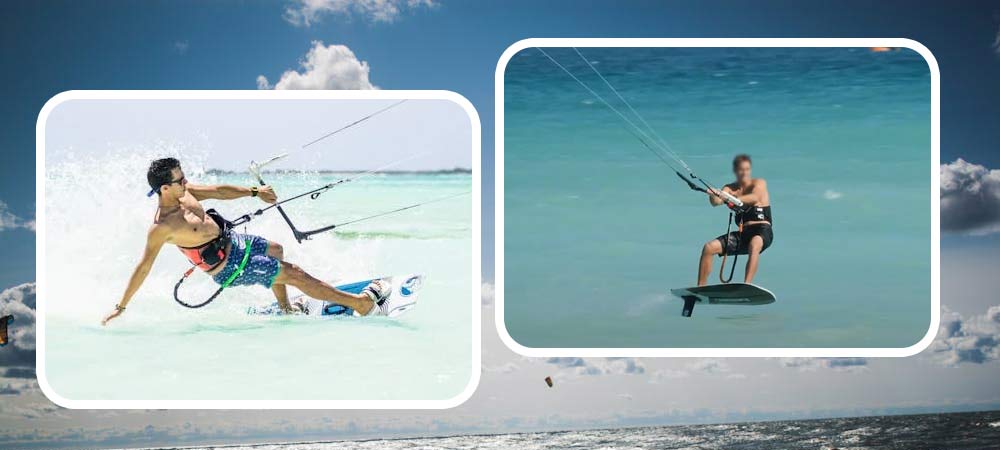
Foil kiting, by contrast, uses an underwater wing (the foil) to generate lift. Once the board rises above the surface, water resistance drops dramatically—often by more than 80% compared to surface planing boards.
This single change explains nearly everything beginners experience as “faster”:
-
Earlier takeoff in lower wind
-
Higher average cruising speed
-
Less physical strain per session
A kitefoil is not about extreme top speed. It is about efficiency across conditions.
Kitefoil vs Traditional Kitesurfing: The Physics Behind “Faster”
Speed means different things depending on perspective. For beginners, this distinction is critical.
1. Peak Speed (What Pros and Racers Measure)
In controlled conditions, traditional race boards and twin tips can achieve high peak speeds. This is where foil race equipment excels, often exceeding 30 knots.
However, peak speed is rarely relevant for a kite foiling beginner.
2. Average Speed (What Beginners Actually Experience)
Average speed includes:
-
Time spent water starting
-
Time slogging between gusts
-
Speed lost during transitions
Here, kitefoiling consistently outperforms traditional kitesurfing.
Independent GPS session data from recreational riders shows:
-
Twin tip beginners average 8–12 knots over a session
-
Kitefoiling beginners often average 12–18 knots, even in lighter wind
The foil simply stays flying while surface boards slow down.
3. Usable Speed Window (The Hidden Advantage)
This is where kite foiling truly shines.
A kite foiling beginner can:
-
Ride effectively in 8–10 knots
-
Maintain speed through lulls
-
Continue riding when others are walking back up the beach
This “always moving” sensation is what most beginners describe as “faster,” even when top speed is not the goal.
Why Kite Foiling Feels Faster With Less Effort
One of the most surprising realizations for new riders is that kite foiling often feels easier on the body.
This seems counterintuitive—after all, the equipment looks more technical. But effort is not determined by complexity; it is determined by resistance.
Once airborne:
-
Leg fatigue drops significantly
-
Kite handling becomes lighter
-
Small steering inputs produce meaningful results
Beginners often report that a two-hour kitefoiling session feels less exhausting than one hour of traditional kitesurfing in similar wind.
This is why foil kiting has expanded rapidly in:
-
Light-wind inland locations
-
Cold-water regions (again, kite foil Canada is a prime example)
-
Spots where long cruising sessions matter more than tricks
Common Beginner Myths That Hold Riders Back
Despite its advantages, many beginners delay kite foiling due to outdated assumptions.
“Kite Foiling Is Too Dangerous”
Modern foils are vastly different from early designs. Rounded edges, controlled lift profiles, and beginner-friendly aspect ratios have significantly reduced risk.
With proper instruction and conservative setup choices, injury rates for beginners are comparable to traditional kitesurfing.
“You Need to Be an Expert First”
In reality, many skills transfer directly:
-
Kite control
-
Wind awareness
-
Balance and edging concepts
What changes is timing—not difficulty.
“It’s Only for Racing”
While foil race has driven innovation, most kitefoiling today is recreational. Freeride-oriented setups prioritize stability, predictability, and progression—not maximum speed.

How Kite Foiling Beginners Actually Learn Faster
The biggest learning accelerator is not talent—it is repetition.
Because kitefoiling:
-
Works in lighter wind
-
Requires less physical recovery
-
Allows longer sessions
Beginners simply get more attempts per day.
More attempts mean:
-
Faster balance adaptation
-
Quicker muscle memory development
-
Reduced fear response
This compounding effect explains why many riders who struggled for seasons on twin tips suddenly progress rapidly after switching to a foil.
Where Equipment Choice Quietly Shapes the Learning Curve
At this point, many beginners start asking about gear—not to chase performance, but to remove friction from learning.
Key beginner priorities include:
-
Predictable lift rather than aggressive acceleration
-
Compatibility with existing boards
-
Upgrade paths instead of dead-end purchases
This is where engineering-driven systems begin to matter more than brand hype. Modular foil systems, adaptable drive assistance, and compatibility across setups allow beginners to progress without replacing everything as skills improve.
Brands like ASUFUN, which focus on compatibility and system thinking rather than isolated products, naturally fit into this progression-first mindset—especially for riders who want support rather than trial-and-error frustration.
(We will explore equipment logic in depth in Part 2.)
Kite Foiling Beginner: A Learning Path That Actually Works
One of the biggest mistakes beginners make is assuming that kite foiling requires an entirely new skill set from day one. In reality, most successful kite foiling beginner progressions follow a layered transfer model—you reuse familiar kitesurfing skills, then gradually adapt them to the foil environment.
A realistic learning path usually unfolds in four overlapping phases, not clean steps.
Phase 1: Foil Awareness Without Flying
Before sustained flight, beginners must first understand how a foil wants to move.
Key objectives:
-
Taxiing with the foil partially loaded
-
Feeling lift onset without committing to height
-
Learning how small speed changes affect pitch
This phase often frustrates beginners because progress feels invisible. But skipping it leads directly to over-lift, breaches, and confidence loss later.
Experienced instructors consistently observe that riders who spend 2–4 focused sessions here progress faster overall than those who rush into full flight.

Phase 2: Short Controlled Flights
This is where kite foiling suddenly “clicks.”
Instead of chasing height or speed, successful beginners focus on:
-
Micro-adjustments in body position
-
Maintaining constant kite pull
-
Keeping foil height below knee level
Data from training schools shows that riders who deliberately limit foil height during early flights experience fewer crashes and faster balance adaptation.
This restraint pays dividends later during transitions and gybes.
Phase 3: Sustained Cruising and Direction Control
Once sustained flight becomes consistent, beginners often experience a second plateau. Speed feels easy, but direction feels vague.
This is the moment where:
-
Upwind angles start to matter
-
Board trim becomes critical
-
Small mistakes compound quickly
It is also the stage where many riders begin to appreciate why kitefoiling feels faster than traditional kitesurfing: the foil continues to fly even as the rider refines control.
Phase 4: Transitions as Skill Multipliers
Transitions—especially the kite foil gybe—are not tricks. They are efficiency tools.
A beginner who cannot gybe:
-
Loses ground downwind
-
Spends excessive time water starting
-
Burns energy resetting position
Which brings us to the most important milestone in kitefoiling progression.
Kite Foil Gybe: The First True Breakthrough
For a kite foiling beginner, the first clean kite foil gybe often feels more significant than the first sustained flight.
Why? Because it signals a shift from riding to riding with intention.
A successful foil gybe demonstrates:
-
Speed control without panic
-
Lift management through direction change
-
Kite handling under reduced apparent wind
It is the first time beginners prove they are no longer dependent on brute force or luck.

Why Kite Foil Gybes Are Harder Than They Look
From the beach, a foil gybe looks slow and graceful. From the rider’s perspective, it is a carefully timed balancing act.
The challenges include:
-
Managing speed loss as the board turns downwind
-
Preventing foil stall during kite transition
-
Re-centering weight without overcorrecting
Most failed gybes happen not at entry, but mid-transition, when beginners instinctively pull harder on the kite instead of stabilizing the foil.
Entry Speed: The Most Misunderstood Variable
Contrary to intuition, more speed does not equal easier gybes.
Data collected from recreational GPS sessions shows that:
-
Gybes entered at moderate, controlled speed have higher completion rates
-
Overpowered entries increase breach risk and stall recovery time
Successful beginners learn to shed excess speed before the turn, not during it.
Foil Design and Its Influence on Beginner Gybes
Not all foils behave the same during transitions.
Beginner-friendly foils typically feature:
-
Thicker profiles
-
Lower aspect ratios
-
Predictable stall characteristics
These designs maintain lift longer at lower speeds, which is crucial during the slowest phase of a kite foil gybe.
This is one reason why equipment developed for foil race—despite being associated with elite performance—has indirectly improved beginner progression. Race development forced manufacturers to refine lift efficiency, control, and stability, innovations that now trickle down into freeride-oriented systems.
How Foil Race Technology Benefits Beginners
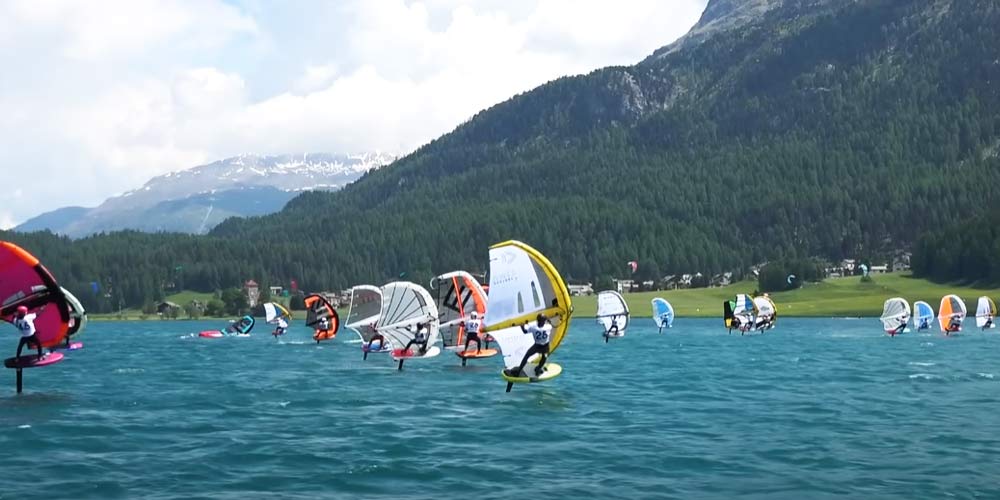
It may seem counterintuitive, but foil race has played a major role in making kitefoiling more accessible.
Key advancements driven by racing include:
-
More efficient foil profiles
-
Reduced drag at lower speeds
-
Better mast stiffness and feedback
For beginners, this translates into:
-
Smoother lift onset
-
Less twitchy pitch behavior
-
Greater tolerance for mistakes
Modern beginner foils benefit from years of race-driven refinement—even if the rider never intends to compete.
Why Beginners Progress Faster in Light Wind on Foils
Light wind is traditionally considered “bad learning conditions.” For kitefoiling, the opposite is often true.
In lighter wind:
-
Kite pull is smoother
-
Speed builds gradually
-
Crashes are lower impact
Many instructors now deliberately teach kite foiling beginners in 10–12 knot conditions, where control and finesse develop naturally.
This explains why kitefoiling has grown rapidly in locations with marginal wind—again making kite foil Canada a strong example, where consistent light wind days outnumber high-wind sessions.
The Role of the Right Kitesurf Shop in Beginner Success
Unlike twin tips or surfboards, foils are systems. Mast length, wing size, fuselage length, and board volume interact in complex ways.
This is why choosing the right kitesurf shop matters far more for kitefoiling beginners than for traditional gear.
A knowledgeable shop can:
-
Match foil size to rider weight and conditions
-
Recommend progression-friendly setups
-
Provide tuning advice that prevents frustration
In regions like Canada, where water temperature, wind range, and session length differ significantly from tropical spots, local expertise becomes invaluable.
Where ASUFUN Fits Naturally Into the Beginner Journey
As beginners move beyond their first flights and start focusing on efficiency, consistency, and longer sessions, many discover that adaptability matters more than raw performance.
Systems designed around:
-
Compatibility with multiple boards
-
Modular component choices
-
Engineering-driven reliability
Quietly support progression without locking riders into a single path.
ASUFUN’s approach—focusing on modular foil and assist systems rather than one-off products—aligns with how kitefoiling beginners actually evolve: gradually, experimentally, and with changing priorities.

What Kite Foiling Changes Long Term for Beginners
Most beginners judge a sport by how fast they can stand up or ride a straight line. Experienced riders judge it by something else entirely: how often they can ride, how long they can stay on the water, and how little energy it costs to enjoy the session.
This is where kite foiling quietly separates itself from traditional kitesurfing.
For a kite foiling beginner, progression does not end with the first sustained flight or the first kite foil gybe. Those milestones simply unlock a different relationship with wind and water.
Over time, riders consistently report three long-term changes after committing to kitefoiling:
-
More rideable days per season
-
Longer average sessions with less fatigue
-
Greater confidence in marginal or variable conditions
These are not emotional impressions. They are direct consequences of reduced drag, improved efficiency, and wider usable wind ranges.
Why Kite Foiling Keeps Feeling “Fast” Even After the Learning Phase
The sensation of speed in kitefoiling evolves.
In the beginning, it feels fast because you are flying above the water. Later, it feels fast because you are covering distance effortlessly.
Unlike traditional kitesurfing—where speed often requires power, edging, and physical tension—kitefoiling rewards precision and flow. Riders spend less time fighting the kite and more time choosing lines.
This is especially noticeable once transitions become reliable. After a consistent kite foil gybe, sessions stop being broken into short reaches and rest periods. They become continuous rides.
That continuity is the true definition of “faster” for most non-racing riders.
Foil Race Influence: Why Performance Tech Benefits Recreational Riders
Even if you never plan to compete, foil race development affects your experience.
Racing pushed designers to solve problems that matter to everyone:
-
Lift efficiency at lower speeds
-
Reduced drag across a wide range of angles
-
Structural stiffness without excessive weight
These improvements eventually filter into freeride and beginner-friendly equipment. Today’s entry-level foils are safer, more predictable, and more forgiving precisely because elite riders demanded performance at the limits.
For a kite foiling beginner, this means:
-
Fewer violent stalls
-
More gradual lift response
-
Better control during transitions
Modern kitefoiling gear is not beginner-friendly despite racing—it is beginner-friendly because of it.
Location Matters: Why Kite Foil Canada Is a Perfect Case Study
Geography plays a critical role in whether beginners thrive or struggle.
Canada has become a surprisingly strong example of why kitefoiling makes sense for newcomers:
-
Many spots experience moderate or light wind
-
Cold water favors efficient, low-effort riding
-
Large lakes and open coastlines reward upwind ability
In these conditions, traditional kitesurfing often feels limiting. Riders wait for stronger wind, tire quickly, or struggle to stay upwind.
Kitefoiling changes the equation. Riders in kite foil Canada environments can:
-
Ride in lower wind ranges
-
Cruise comfortably without constant power
-
Maximize limited seasonal windows
This is why Canadian riders are disproportionately represented among new kitefoil adopters—and why local knowledge matters so much when choosing gear.
Why Choosing the Right Kitesurf Shop Is Critical for Foiling
Foils are not plug-and-play toys. They are systems.
Mast length affects pitch stability. Front wing size affects lift curve. Board volume influences takeoff behavior. Small mismatches can turn learning into frustration.
This is why working with an experienced kitesurf shop matters far more for foiling than for twin tips or surfboards.
A good shop does more than sell equipment. It:
-
Matches foil geometry to rider weight and conditions
-
Helps beginners avoid overly aggressive setups
-
Provides tuning advice that shortens the learning curve
For beginners especially, the difference between generic online purchasing and informed consultation can mean the difference between progress and abandonment.
How Smart Beginners Think About Equipment Investment
As beginners gain experience, their mindset changes.
Early on, the question is:
“What will get me riding?”
Later, it becomes:
“What will let me progress without starting over?”
This is where system thinking matters.
Instead of chasing single-purpose products, experienced beginners look for:
-
Compatibility across boards and foils
-
Modularity that allows gradual upgrades
-
Support that extends beyond the sale
This approach reduces long-term cost and frustration, even if the initial decision requires more thought.

Where ASUFUN Fits Into This Progression—Naturally
ASUFUN does not position itself as a shortcut to skill, and that is precisely why it resonates with experienced beginners.
Its product philosophy focuses on:
-
Modular foil and assist systems
-
Compatibility with a wide range of boards
-
Engineering-driven reliability rather than marketing-driven claims
For kite foiling beginners transitioning into confident riders, this kind of system-based approach offers flexibility. Riders can adapt setups as conditions, locations, and goals change—without discarding everything they have learned or invested in.
Rather than forcing riders into predefined paths, ASUFUN quietly supports progression by reducing friction, increasing usable conditions, and allowing experimentation with confidence.
When Beginners Know It’s Time to Ask for Advice
There is a clear moment in every kite foiling beginner’s journey when self-learning stops being efficient.
This moment often arrives when:
-
Gybes work occasionally but not consistently
-
Equipment feels “almost right” but not quite
-
Progress slows despite increased water time
This is the ideal time to consult—not necessarily to buy, but to clarify direction.
Whether through a trusted kitesurf shop, an experienced brand advisor, or a modular system provider, informed guidance often unlocks the next level faster than months of trial and error.
Why Kite Foiling Is a Smarter Kind of Speed
Kitefoiling is not faster because it looks futuristic. It is faster because it removes resistance—physical, environmental, and psychological.
For beginners, that means:
-
Earlier starts
-
Longer rides
-
More progress per session
Over time, those advantages compound. What begins as curiosity becomes confidence, and what begins as learning becomes freedom.
At Asufun we specialize in providing surfers with all things surf gear. Whether you need customization or affordable casual options, we have you covered. Contact us for a free consultation to find the perfect surfing equipment for you.


📞 Tel/Wechat : 13038886712
📞 WhatsApp:+86 15173416661
Online mall : https://asufun.com/
📧 Email: hydrofoildrive@gmail.com
📸 Instagram: https://www.instagram.com/hydrofoildrive/
🌐 URL: https://hydrofoildrive.com

0 comments